

Selecting the correct motor for industrial machinery is not just about power output. The right motor directly affects productivity, energy efficiency, machine life, process accuracy, and workplace safety. In industries where operations depend on continuous movement, automation, mixing, lifting, winding, or material handling, pneumatic solutions have become an essential part of modern manufacturing systems. Unlike electric drives, air motors are designed to deliver reliable performance in environments where moisture, dust, heat, chemicals, or explosive conditions may be present. Their compact structure, overload resistance, and variable speed capabilities make them highly suitable for industrial operations that demand flexibility and durability. However, choosing the wrong pneumatic motor can lead to performance issues, excessive air consumption, operational inefficiencies, and increased maintenance costs. This is why industries must evaluate.
This guide explains how to select the right motor based on industrial applications requirements, operating conditions, and performance expectations.
Why Air Motors Are Widely Used In Industries
Industrial processes often require equipment that can perform continuously under fluctuating loads without overheating or failure. This is one of the major reasons why air motors are increasingly preferred across sectors such as pharmaceuticals, food processing, automotive, packaging, marine, mining, and chemical manufacturing.
These motors use compressed air as the power source, which offers advantages such as:
- Instant start and stop capability
- Safe operation under overload conditions
- Spark-free functioning
- Compact and lightweight design
- Easy speed variation
- Reliable performance in wet or hazardous environments
Because compressed air is commonly available in industrial plants, pneumatic systems can easily integrate into existing operations.
Understanding Different Types Of Pneumatic Motors
Before selecting a motor, it is important to understand the available motor technologies and their industrial suitability.
Vane Motors
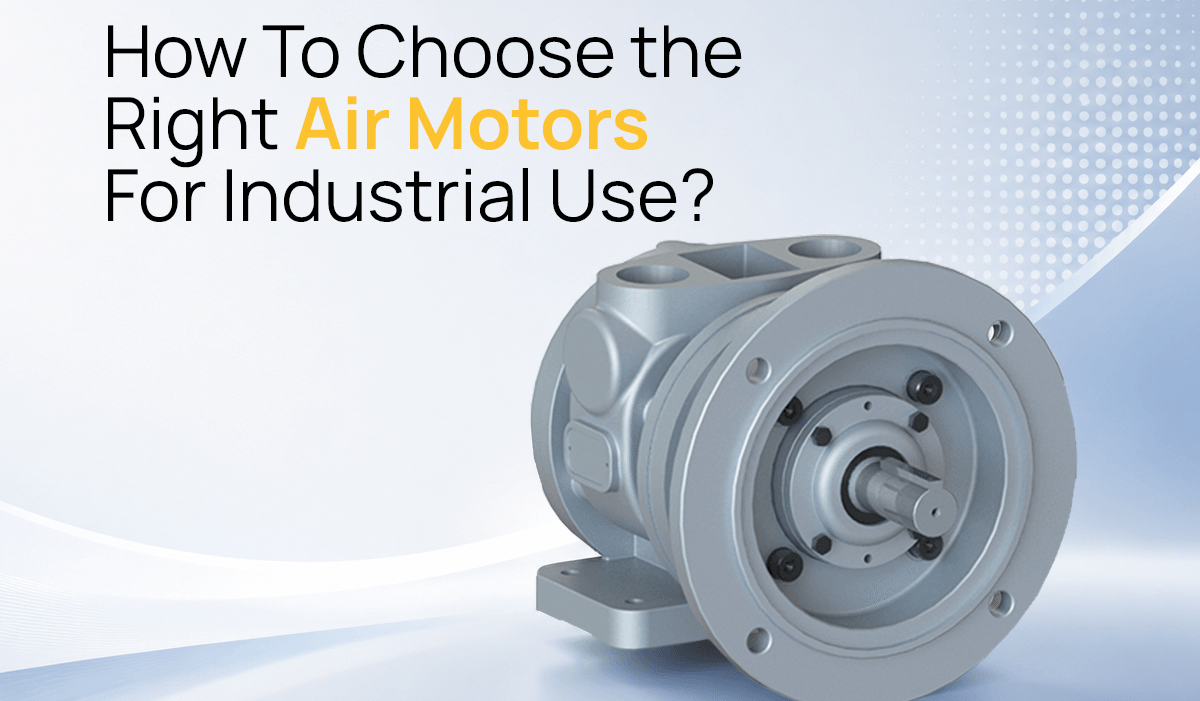
The most commonly used pneumatic technology is the vane-type air motor. It operates through rotating vanes placed inside a cylindrical chamber. Compressed air pushes the vanes, generating rotational movements
Industries prefer this design because it offers:
- Smooth speed control
- Compact construction
- Consistent torque delivery
- Fast response time
- Lightweight operation
A properly selected vane-type air motor performs efficiently in applications such as mixers, agitators, conveyors, and winding systems.
Piston Motors
Piston-driven pneumatic systems generate high torque at lower speeds. These motors are suitable for heavy industrial applications such as drilling, mining equipment, and lifting operations.
Turbine Motors
These motors operate at extremely high rotational speeds and are commonly used in precision industrial applications requiring lightweight and high-speed performance.
Factors To Consider While Choosing Air Motors
1. Identify the Application Requirement
The first step in selecting air motors is understanding the exact industrial application.
Different operations demand different performance characteristics. For example:
| Mixing | High starting torque |
| Conveyor Systems | Constant speed |
| Hoists & Winches | Controlled torque |
| Packaging Equipment | Precision movement |
| Winding Machines | Variable speed |
Understanding the process requirement helps industries avoid oversizing or undersizing the motor.
2. Evaluate Required Torque
Torque determines the rotational force generated by the motor. Choosing insufficient torque may reduce machine efficiency, while excessive torque may increase compressed air consumption unnecessarily. Applications involving heavy materials or thick fluids generally require higher torque output. A properly selected air vane motor delivers stable torque even during changing load conditions, making it ideal for industrial environments with variable operational demands.
3. Review Rate Of Operations
The RPM ranges of industrial machines depend on the production requirements.
Some applications need:
- Fast rotation
- Slow controlled motion
- Speed control is variable
- Frequent variations in speed
One of the main advantages of an air vane motor is that speed can be controlled just by adjusting air pressure and air flow. This flexibility allows for optimizing the performance of the machine without the use of complex electronic control systems.
4. Consider Air Supply Availability
Since pneumatic motors operate using compressed air, a stable air supply is essential for consistent performance.
Industries should evaluate:
- Air pressure availability
- Compressor capacity
- Air quality
- Moisture levels
- Air filtration system
Contaminated or unstable air supply can reduce the operational life of air motors and affect efficiency.
5. Check Environmental Conditions
Industrial environments often expose equipment to difficult conditions such as:
- High humidity
- Chemical exposure
- Dust accumulation
- Outdoor weather
- High-temperature zones
This is where pneumatic technology provides a major advantage over conventional electric systems. A durable vane-type air motor can perform effectively even in harsh industrial surroundings where electrical equipment may face operational risks.
6. Understand Stall Conditions Pumping Solutions
Many industrial applications involve sudden load changes or temporary blockages. Unlike electric systems, pneumatic motors can safely stall without overheating or sustaining permanent damage. This capability is especially valuable for applications such as:
- Material handling systems
- Conveyor belts
- Drum mixers
- Industrial winding units
Because of this operational safety, air motors are widely used in demanding manufacturing environments.
7.Evaluate Noise Levels
Noise reduction has become an important consideration in modern industrial facilities. Industries now prefer motors designed with advanced airflow systems and integrated silencers to minimize operational noise. Selecting a properly engineered pneumatic solution improves workplace comfort while supporting compliance with industrial safety standards.
Industries Using Air Motors
Food Processing Industry
Compact, hygienic motor systems are required in food manufacturing operations and must be capable of operating in washdown environments. Pneumatic motors are used for safe and efficient processing conditions.
Pharmaceutical Manufacturing
Pharmaceutical plants require precise motion, contamination-free operation, and safe equipment operation. Pneumatic systems are well qualified to meet these needs.
Print & Packaging
Variable speed control and continuous operation are often required for packaging lines. Pneumatic motors provide smooth motion and rapid reaction in automated production cycles.
Marine Industry
Marine environments subject machinery to moisture and corrosion. Pneumatic systems also prove dependable in these extreme conditions.
Chemical Plants
Pneumatic systems are preferred in chemical processing plants for their safe operations in explosive and hazardous environments.
Benefits Of Selecting The Right Motor
The choice of the correct pneumatic motor enhances the general efficiency of the industry in many ways:
Better Machine Reliability
Correct motor sizing reduces unnecessary stress on equipment.
Improved Production Efficiency
Improved operational consistency with optimized torque and speed.
Reduced Down Time
Reliable systems are built to prevent unexpected failure.
Reduced Maintenance Costs
Choosing the right motor reduces wear and service frequency.
Safety Enhancement
Pneumatic systems increase the operational safety in hazardous environments.
Common Mistakes Industries Should Avoid
When selecting motors, industries often make avoidable mistakes that affect long-term performance. Some common errors include:
- Ignoring torque calculations
- Overlooking air pressure requirements
- Selecting motors based only on speed
- Failing to evaluate environmental conditions
- Choosing oversized systems unnecessarily
- Neglecting maintenance accessibility
Avoiding these mistakes helps industries achieve better operational reliability and cost efficiency.
Maintenance Tips For Long-Term Performance
Even though pneumatic systems are known for durability, proper maintenance remains essential. Key maintenance practices include:
- Using clean and dry compressed air
- Regularly inspecting vanes and seals
- Monitoring air pressure consistency
- Cleaning exhaust systems
- Replacing worn components on schedule
A well-maintained air vane motor delivers stable performance and extended service life.
Future Of Pneumatic Motor Technology
Industrial automation is driving demand for smarter and more energy-efficient pneumatic systems. Modern motors now feature:
- Advanced vane materials
- Improved airflow efficiency
- Compact lightweight construction
- Reduced operational noise
- Enhanced durability
- Better speed precision
These developments support industries seeking higher productivity and operational flexibility. Teryair delivers pneumatic solutions designed to meet evolving industrial demands with a strong focus on performance, durability, and application-specific engineering. Through continuous innovation, Teryair supports industries requiring dependable and efficient motor technologies.
Summary
Choosing the right pneumatic motor is a critical decision that directly impacts industrial productivity, equipment life, and operational safety. Factors such as torque, speed, environmental conditions, air supply quality, and application type must all be carefully evaluated before selection. Modern air motors provide industries with flexible, safe, and durable power solutions capable of performing reliably in demanding operating environments. From packaging systems and chemical plants to marine operations and automation lines, pneumatic technology continues to play a vital role in industrial growth and efficiency. By understanding operational requirements and selecting the right configuration, industries can achieve better process control, lower maintenance costs, and long-term operational reliability.
Key factors include torque, speed, air pressure availability, environmental conditions, duty cycle, and application requirements.
They are widely used in industries such as food processing, packaging, chemicals, marine, pharmaceuticals, and automation.
Its compact design, smooth speed control, reliable torque, and operational durability make it highly suitable for industrial applications.
Yes, they are ideal for hazardous areas because they function without electrical sparks.
Using clean compressed air, regular maintenance, proper lubrication, and periodic inspection helps extend motor lifespan.