

Industrial pumping applications come with a long list of demands, corrosive fluids, abrasive slurries, viscous materials, and processes that simply cannot afford unplanned downtime. Over the years, we’ve worked with manufacturers across chemicals, food processing, paints, and heavy industry who were looking for a pumping solution that didn’t come with the complexity, maintenance burden, or fragility of conventional pump systems. Time and again, the answer has come back to one design in particular, the AODD pump. In this blog, we’re breaking down exactly what makes this design so effective, and why it continues to simplify AODD pump operations across such a wide range of industries.
A Design Built Around Simplicity
Manufacturers rarely set out looking for a “simple” pump, they’re usually looking for one that just works, shift after shift, without constant intervention. What they often find is that simplicity in design is precisely what delivers that reliability. Fewer components generally mean fewer things that can go wrong, and that principle sits at the heart of why this technology has earned such a strong reputation across demanding industrial environments.
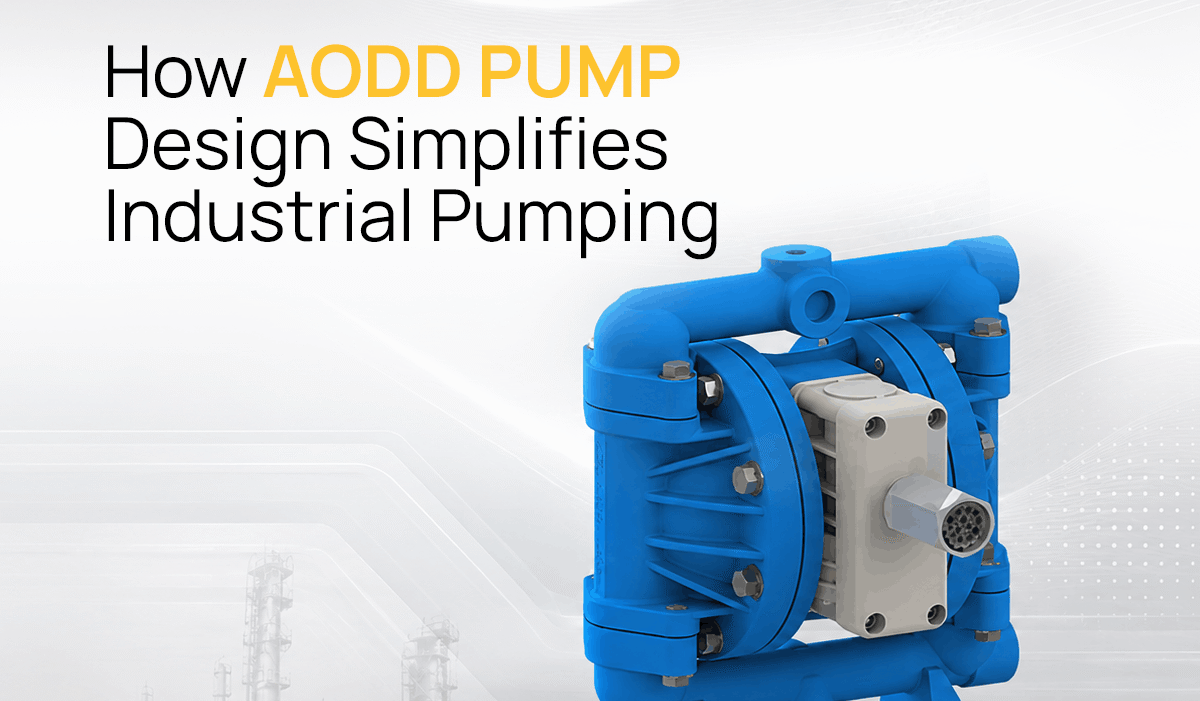
At its core, the appeal of this AODD pump design comes down to how few moving parts are actually involved in getting fluid from one point to another. Unlike centrifugal or gear pumps that rely on rotating shafts, seals, and bearings, this design uses compressed air to alternately flex two diaphragms, drawing fluid in on one side while pushing it out on the other. Fewer rotating components mean fewer failure points, and that single design choice is responsible for much of the reliability manufacturers have come to expect from these systems.
Handling Difficult Fluids Without Difficulty
One of the clearest advantages of air-operated diaphragm pumps is their ability to handle fluids that would damage or clog other pump types. Thick slurries, fluids containing solids, and highly viscous materials all move through the system without the shearing or heat buildup that can occur in other pump designs. This makes the technology especially valuable in industries like paints, adhesives, food processing, and wastewater treatment, where fluid consistency varies constantly, and equipment needs to handle that variation without constant adjustment.
Self-Priming Operation Without Complications
Many industrial processes involve pumping from tanks or sumps where fluid levels fluctuate, or where the pump needs to run dry for short periods without damage. An air-operated double diaphragm pump is inherently self-priming, meaning it doesn’t require additional priming equipment or manual intervention to start moving fluid, even after periods of inactivity. This significantly simplifies installation and reduces the operational complexity that often comes with other pump technologies requiring careful priming procedures.
Running Safely In Sensitive Environments
Because this design operates on compressed air rather than electricity, it eliminates the risk of electrical sparking, a critical safety consideration in facilities handling flammable or combustible materials. An AODD pump can be used in hazardous zones without the additional safety infrastructure that electric pump alternatives often require, simplifying both compliance and installation for manufacturers operating in classified environments.
Adjustable Flow Without Additional Equipment
Flow rate control is often a complicated add-on in conventional pump systems, requiring variable frequency drives or additional valving. On an AODD pump, flow rate is controlled simply by adjusting the compressed air supply, giving operators direct control over output without needing separate flow control equipment. This straightforward approach to flow adjustment is one of the reasons the design continues to be favoured in applications where fluid demand changes throughout a shift.
Lower Maintenance, Fewer Interruptions
Simplicity in design translates directly into simplicity in maintenance. With fewer components subject to wear, no mechanical seals, no bearings, and no rotating shafts, an air-operated double diaphragm pump generally requires less frequent servicing than comparable pump technologies. When maintenance is needed, diaphragm replacement is typically straightforward, minimizing the downtime associated with keeping the system running.
Versatility Across Industrial Applications
Perhaps the most practical benefit of this pump design is its sheer versatility. Across chemical transfer, dewatering, food and beverage processing, paint and coatings, and general industrial fluid handling, air-operated diaphragm pumps are adapted using the same fundamental design principles. Rather than requiring a different pump technology for every application, manufacturers can often standardize around a single pumping platform, simplifying spare parts inventory, operator training, and long-term maintenance planning.
Cost Efficiency Over The Equipment Lifecycle
While upfront costs are always a consideration, the operational simplicity of air-operated diaphragm pumps often translates into lower total cost of ownership over time. Reduced downtime, simpler maintenance procedures, and longer service life all contribute to a pump system that costs less to operate across its lifecycle, even if the initial investment is comparable to alternative technologies.
Getting The Configuration Right
Not every application requires the same pump configuration, and getting the details right, including diaphragm material, port size, and air consumption requirements, makes a meaningful difference in performance. Working with experienced aodd pump manufacturers ensures that these decisions are made correctly from the outset, rather than discovered through trial and error after installation. The right upfront guidance often prevents inefficiencies that would otherwise surface well into a system’s operational life.
Why This Design Continues To Be The Preferred Choice
Industrial pumping doesn’t need to be complicated, and that’s really the point behind the entire design philosophy of an AODD pump. By minimizing moving parts, eliminating electrical risk, simplifying flow control, and reducing maintenance demands, it consistently delivers the reliability that industrial processes depend on, without adding operational complexity. At Teryair, we’ve seen firsthand how this simplicity translates into fewer disruptions and more consistent output for the manufacturers we work with.
Summary
Whether it’s handling difficult fluids, operating safely in hazardous zones, or adjusting to fluctuating flow requirements, the fundamental design behind air-operated double diaphragm pump technology continues to prove why it remains a preferred choice across industrial pumping applications. Simplicity, in this case, isn’t a compromise, it’s precisely what makes the system so dependable.
If your facility is evaluating pump technologies for a demanding application, it’s worth considering whether this design’s inherent simplicity could reduce both your operational complexity and long-term maintenance costs. Fewer parts to service, fewer failure points to plan around, and a design proven across decades of industrial use, that combination is difficult to overlook when reliability is non-negotiable. At Teryair, our team is always available to help identify the right configuration for your specific process.
FAQs:
Unlike centrifugal or gear pumps that rely on rotating shafts, seals, and bearings, an
Yes. Air-operated diaphragm pumps are well-suited to handling thick slurries, fluids containing solids, and highly
Yes, an air-operated double diaphragm pump is inherently self-priming, meaning it doesn’t require additional priming
Yes. Since an <b>AODD pump</b> operates on compressed air rather than electricity, it eliminates the risk of electrical
The right configuration depends on factors like diaphragm material, port size, and air consumption requirements specific