

When a pump stops in the middle of a shift, every minute counts. At Teryair, we know that most pump problems are not mysterious. They trace back to a small number of parts that wear, clog, or loosen over time. Air-operated diaphragm pumps are valued for their simple construction, but that simplicity only helps if your team knows what each part does and what its failure looks like. This guide walks through the key components of an AODD pump, the symptoms that point to each one, and the maintenance habits that stop problems from returning.
How The Pump Is Laid Out
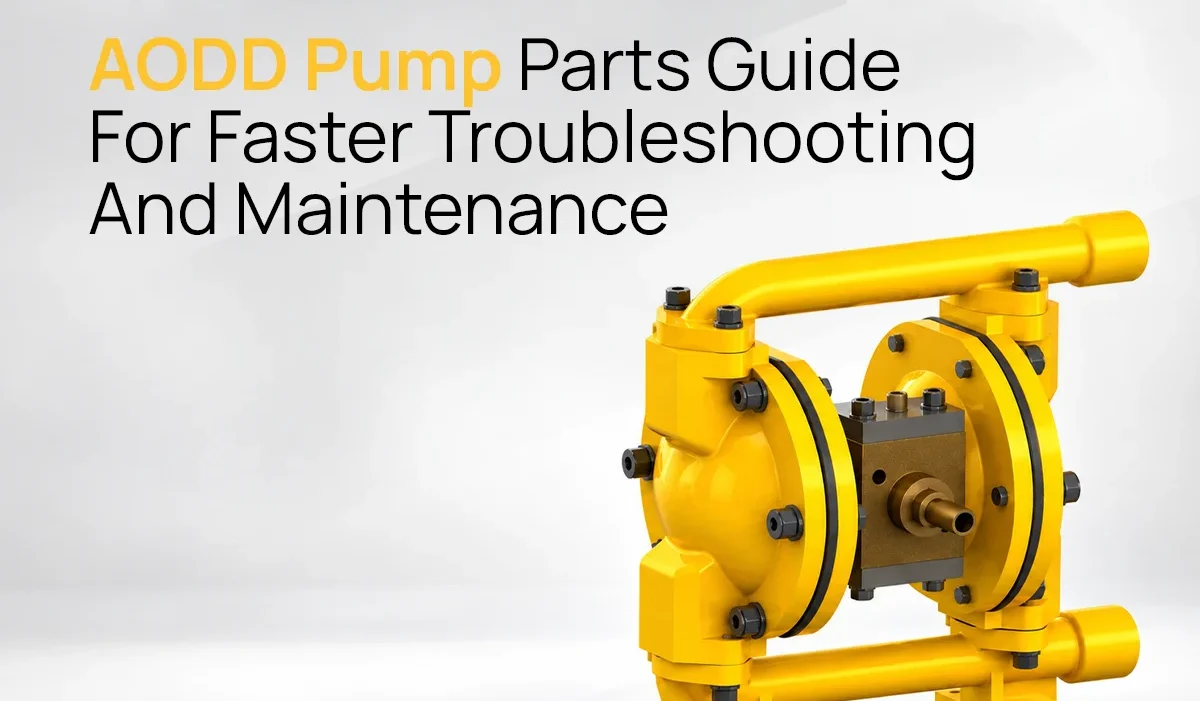
An air-operated double diaphragm pump is built around four groups of parts: the air side, the diaphragm assembly, the wet end, and the sealing and fastening hardware. Compressed air enters the air valve, which directs it behind one diaphragm and then the other. As the diaphragms move, they draw fluid in and push it out through the check valves.
This layout makes troubleshooting easier. Every fault belongs either to the air side or the fluid side, and deciding which one it is before you dismantle anything can save hours.
Air-Side Parts
The air side controls the pump’s rhythm. If the pump stalls, runs erratically, or slows down, start here.
- Air supply, filter, and regulator: Wet, dirty, or low-pressure air causes many complaints. Check line pressure and drain the filter first.
- Main air valve: This spool-and-sleeve assembly shifts air from one chamber to the other. Worn seals or contamination can cause stalling, air leakage, or uneven cycling.
- Pilot valve and actuator plungers: These signal the air valve to shift. Sticking or worn plungers can leave the pump stuck mid-stroke.
- Muffler: A blocked or iced muffler restricts exhaust air and slows the pump. Frost on the outside is a clear warning sign.
An AODD pump needs clean, dry air at the right pressure and volume. If the air side checks out, the problem almost certainly lies on the fluid side.
Diaphragm Assembly
The diaphragms are the heart of the pump and its most common wear part.
- Diaphragms: These flex with every stroke and separate the air from the fluid. A failing diaphragm shows up as fluid coming out of the exhaust, air bubbles in the discharge, or a sudden drop in flow.
- Diaphragm plates: The inner and outer plates clamp the diaphragm to the shaft. Loose or cracked plates damage the diaphragm and reduce stroke efficiency.
- Connecting shaft: This rod links the two diaphragms. Scoring or wear lets air or fluid pass where it should not.
- Shaft seals and bushings: These keep the air side and fluid side apart. Worn seals can allow cross-contamination.
If you find a failed diaphragm, always inspect the plates and shaft before refitting. A new diaphragm on a damaged plate will not last long.
Wet-End Parts
The wet end is everything the pumped fluid touches. It takes the most abuse in wastewater, slurry, and chemical duty.
- Fluid chambers and manifolds: These guide the liquid in and out. Look for cracks, erosion, and damaged sealing faces.
- Check valve balls and seats: These open and close with every stroke. Worn, swollen, or chipped balls and seats let fluid slip backward, reducing flow.
- Valve O-rings and gaskets: These seal the manifolds and chambers. Hardened or chemically attacked seals cause leaks and air ingress on the suction side.
Wetted parts for air-operated diaphragm pumps are commonly offered in aluminium, polypropylene, PVDF and stainless steel, with elastomers such as PTFE, EPDM and Buna-N. Choosing the right combination for your fluid is the best way to reduce wear.
Quick Troubleshooting Guide
When an air-operated double diaphragm pump misbehaves, start with the symptom and work back to the part.
| Symptom | Likely cause | First check |
|---|---|---|
| Pump will not start | Low air supply or stuck air valve | Air pressure, filter, and regulator |
| Pump runs but no flow | Blocked or stuck check valve ball | Inlet line and valve balls |
| Reduced flow | Worn balls or seats, air leak on suction | Valve condition, suction fittings |
| Fluid from exhaust | Ruptured diaphragm | Diaphragms and plates |
| Pump stalls mid-stroke | Dirty air or worn pilot components | Air quality, actuator plungers |
| Frost on muffler | Wet air, high air consumption | Air dryer, muffler condition |
| Erratic pulsing | Partial blockage or worn valves | Strainer, valve seats |
Preventive Maintenance Checklist
A short routine prevents most breakdowns. Air-operated diaphragm pumps are simple to service, and a regular schedule keeps them that way.
- Check air quality weekly: Drain the filter and confirm correct pressure.
- Inspect the exhaust: Fluid in the muffler is an early sign of diaphragm failure.
- Check fasteners: Re-torque clamp bands and bolts as the manufacturer recommends, since diaphragms and gaskets settle over time.
- Inspect wear parts on schedule: Check diaphragms, balls, and seats at fixed intervals, with shorter gaps for abrasive or chemical fluids.
- Clean strainers and suction lines: Inlet debris is a common cause of poor priming.
- Record every service: Notes on part life help you predict failures before they happen.
Consistent care helps an AODD pump deliver steady, predictable performance with far fewer emergency repairs.
Sourcing The Right Spare Parts
Even the best maintenance plan needs parts on the shelf. A basic spares kit should include diaphragms, check valve balls and seats, O-rings, and the air valve and pilot seals. Keeping these in stock turns a long shutdown into a short one.
When you compare AODD pump manufacturers, ask how easy it is to get genuine spares, how clearly the parts are documented, and how quickly technical help is available. The better AODD pump manufacturers publish exploded drawings and part lists, the easier it is for your team to identify and order the right component the first time. Using matched, quality parts also protects pump performance and keeps your warranty position clear.
Summary
Faster troubleshooting begins with knowing your pump. When you understand the air side, the diaphragm assembly, and the wet end, you can match a symptom to its cause quickly, fix it correctly, and prevent it from returning. Regular inspections, clean air, and a well-stocked spares kit keep your AODD pump running when your process needs it most.
At Teryair, we are ready to help you identify the right parts and keep your pumps working. Contact our team with your pump details, and we will help you get back to full production.
FAQs
Diaphragms, check valve balls and seats, and O-rings wear first because they move or seal with every stroke. Keep these in your spares kit.
This usually means a ruptured diaphragm. Stop the pump, replace the diaphragm and inspect the diaphragm plates and shaft before refitting.
Common causes are a blocked inlet, a stuck or worn check valve ball, or an air leak on the suction side. Check the strainer, suction fittings and valve condition first.
Expanding compressed air chills the exhaust, and moisture in the air turns to ice. Use a dryer air supply and check that the muffler is not blocked.
It depends on the fluid and duty. Inspect more often for abrasive or chemical fluids, and keep a service record so you can predict part life.