


Air Operated Diaphragm Pumps For Australian Industries
Australian businesses run on tough, unpredictable conditions, from remote mine sites in the Pilbara to chemical plants in Gladstone and wineries across the Barossa Valley. Fluids are often corrosive, abrasive, or simply too thick for a standard pump to move safely. This is exactly why so many operations across the country rely on air-operated diaphragm pumps from Teryair. Built for durability and safe, electricity-free operation, our pumps are engineered to keep production moving even in the harshest Australian environments, without the downtime or safety risks that come with conventional pumping equipment.
Understanding How The Pump Mechanism Works
An air-operated double-diaphragm pump works on a simple but effective principle. Compressed air drives two flexible diaphragms back and forth in sync, creating suction on one side while discharging fluid on the other. Because there are no electrical components involved, the pump can run safely in flammable or explosive zones, wet environments, and remote sites where power supply is limited or unreliable. This straightforward mechanism is also why the pump requires so little maintenance compared to electric or mechanical seal pumps, which matters when the nearest service technician might be hours away.
Why Australian Businesses Rely On This Pump Design
Reliability isn’t optional when a mine site, chemical facility, or food processing line depends on continuous fluid transfer. An AODD pump gives operators that reliability without the complexity of electrical wiring or specialised installation. Because these pumps are self-priming and capable of running dry without damage, they suit Australia’s remote and often unpredictable working conditions particularly well. Whether it’s a coastal facility in Queensland dealing with saltwater exposure or an inland mining operation managing dust and vibration, the pump keeps performing where other equipment struggles.
Key advantages that matter to Australian operators include:
- No electrical dependency, making the pump safe for hazardous or explosive atmospheres
- Dry-run capability that protects the pump even when the supply runs low
- Simple servicing thanks to a design with very few moving parts
- Portability that suits temporary sites, mobile operations, and fast reconfiguration
- Consistent, controllable flow rates for processes that can’t tolerate interruption
Where Air-Operated Diaphragm Pumps Are Used Across Australia
Australia’s industrial base is broad, and so is the range of applications for this pump category. Common uses include:
- Mining and mineral processing: transferring slurry, tailings, and mildly abrasive fluids across processing plants and remote sites
- Chemical and petrochemical facilities: handling acids, solvents, and other aggressive media safely
- Water and wastewater treatment: moving sludge, effluent, and treatment chemicals reliably
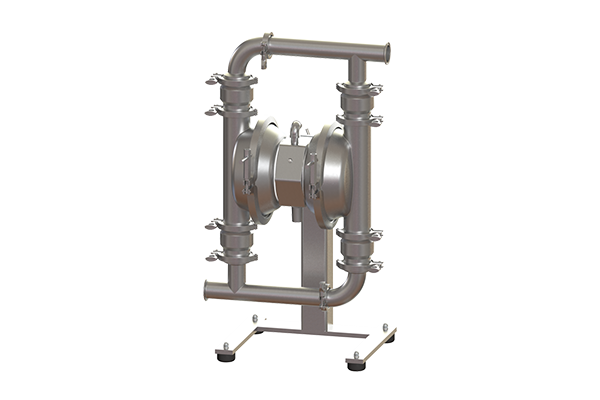
- Food, beverage, and wine production: transferring viscous or delicate liquids without damaging product quality
- Marine and offshore operations: coping with constant vibration, moisture, and salt exposure
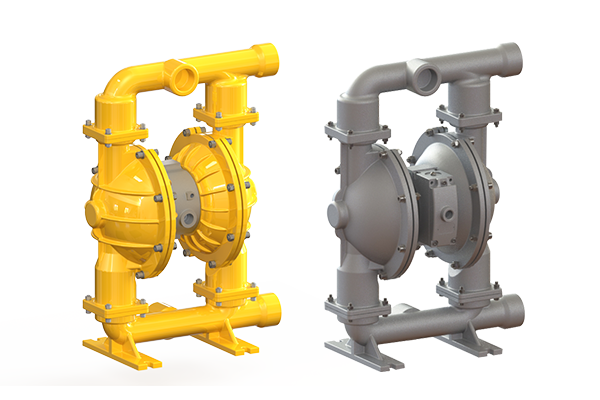
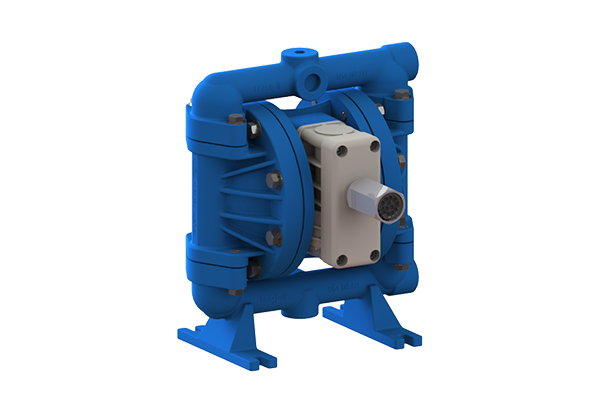
For general-purpose transfer duties where fluids are thick, abrasive, or intermittently supplied, an air diaphragm pump offers the flexibility Australian sites need, without requiring a dedicated electrical supply or complex control systems. In heavy-use plant environments, a rugged double diaphragm pump is often the preferred fit for teams that need dependable, round-the-clock fluid transfer.
Built To Handle Australia’s Toughest Fluids
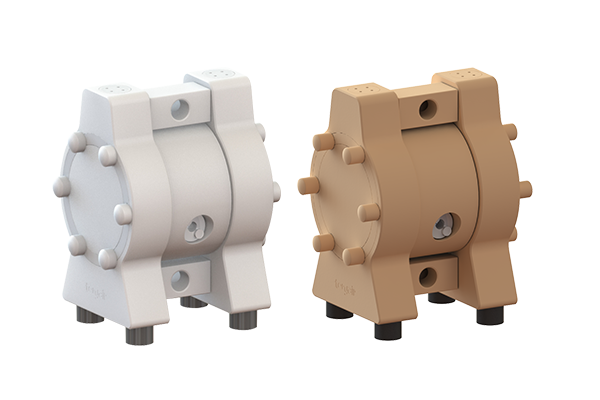
Not every fluid behaves the same way, so pump material matters as much as pump design. A PTFE diaphragm pump is the preferred choice when facilities are handling strong acids, solvents, or other highly corrosive chemicals, since PTFE resists degradation far longer than standard elastomers. This makes it a common choice in chemical processing and industrial cleaning applications where fluid aggression would quickly wear out a lesser pump.
For heavier, continuous-duty operations, such as mineral slurry transfer or high-volume wastewater movement, a double diaphragm pump built for extended run times delivers the consistency operators need without frequent part replacement. Teryair designs both categories to meet or exceed recognised global performance benchmarks, so Australian businesses aren’t compromising on quality just because equipment is sourced internationally.
Built For Compliance And Long-Term Performance
Australian industries operate under strict safety and environmental expectations, and equipment needs to keep pace. Teryair’s air-operated diaphragm pumps are built to international quality and safety standards, giving procurement and engineering teams confidence when specifying equipment for hazardous or regulated environments. Combined with reduced air consumption and lower energy use, our AODD pump range also supports the sustainability goals many Australian businesses are now expected to report against, without sacrificing the performance operators depend on daily.
Choosing the right pump comes down to understanding the fluid, the environment, and the operational demands of the site. Teryair’s team can help Australian businesses match the correct air-operated diaphragm pumps to their exact application, whether that’s a mine site in Western Australia, a chemical plant on the east coast, or a food processing facility anywhere in between. Reach out today to discuss your requirements and find the right pump for your operation.
Explore the Categories







FAQ’s
It’s used to transfer liquids that are thick, abrasive, corrosive, or otherwise difficult for a standard pump to handle. Across Australia, it’s common in mining, chemical processing, water treatment, and food and beverage production.
It runs entirely on compressed air. The air alternately pushes two diaphragms back and forth, drawing fluid in on one side and pushing it out the other. This makes it safe to use in flammable, wet, or remote locations where electrical power isn’t practical.
Yes. Because it has no electrical motor or sparking components, it’s a preferred choice for hazardous zones such as chemical plants, fuel depots, and underground mining operations.
Yes. One of the key advantages of this pump design is dry-run capability, meaning it won’t be damaged if the fluid supply temporarily runs out, which is useful for sites with inconsistent flow.
Common options include polypropylene, aluminium, stainless steel, and PTFE. A PTFE diaphragm pump is generally chosen for handling aggressive chemicals, since PTFE resists corrosion better than standard elastomers.
Mining and mineral processing, chemical manufacturing, water and wastewater treatment, food and beverage production, and marine or offshore operations are among the biggest users.
It depends on the fluid being handled. Plastic pumps (polypropylene or PTFE) suit corrosive chemicals, while metal pumps (aluminium or stainless steel) are better for abrasive slurries or applications needing higher durability.
No. With fewer moving parts and no mechanical seals, they’re simpler to service than electric or centrifugal pumps, which helps reduce downtime on remote or hard-to-access sites.
Yes, when correctly sized for the application. These pumps are commonly used in continuous-duty roles like wastewater transfer and mineral slurry handling, where reliability over long run times matters.
Sizing depends on flow rate, fluid viscosity, discharge distance, and the type of solids or chemicals present. Teryair’s team can help match the right pump size and material to your specific application.