
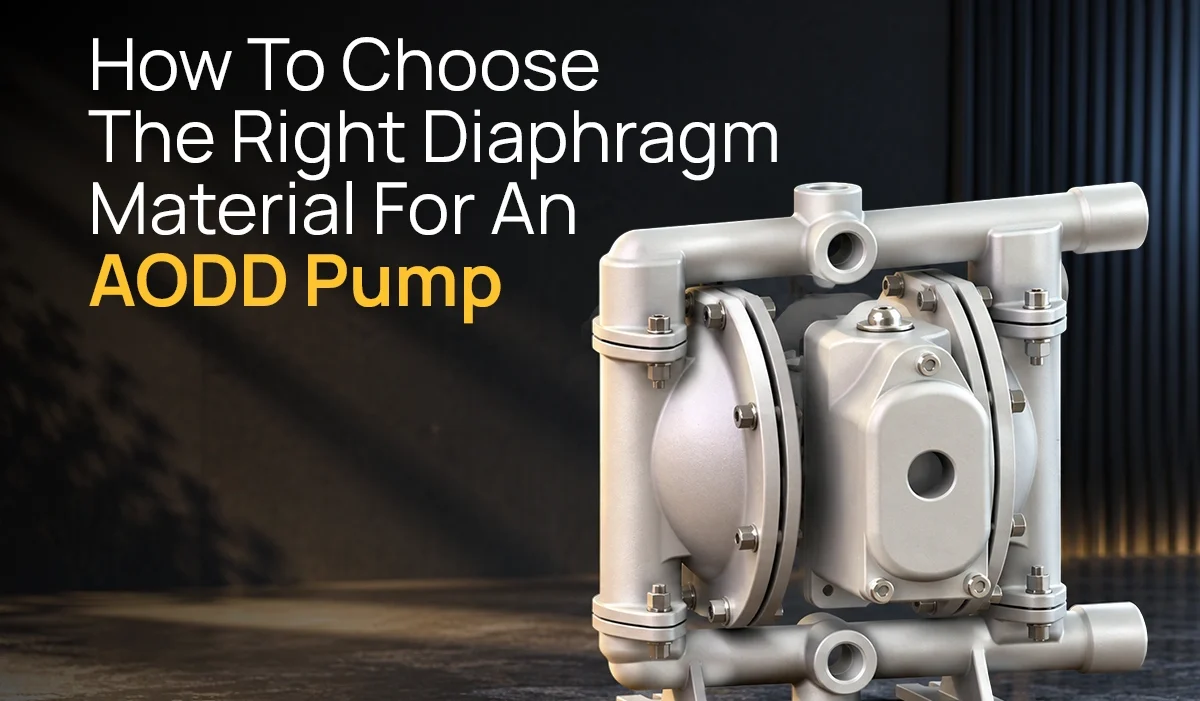
Selecting the right diaphragm material can make or break the performance of your fluid transfer system, and at Teryair, we get asked about this decision almost every week. The diaphragm is the single component that determines how long your pump lasts and how reliably it performs under pressure. In this blog, we walk you through everything you need to know to choose the right diaphragm material for your next AODD pump, so you can avoid premature failures and costly replacement.
Why Diaphragm Material Matters So Much
An air-operated double diaphragm pump works by alternating air pressure between two chambers, flexing the diaphragms back and forth to draw in and discharge fluid. Because the diaphragm is in constant direct contact with the fluid being pumped, it’s also the component under the most mechanical and chemical stress. Choose the wrong material, and you’ll see cracking, swelling, or chemical degradation far sooner than expected. Choose the right one, and your pump can run for years with minimal maintenance.
This is why, when customers ask us how to select a diaphragm for their applications, our answer always starts with three questions: what fluid are you pumping, what temperature range will the pump operate in, and what physical stresses (abrasion, pressure cycling, flex fatigue) will the diaphragm face daily?
Step 1: Understand Your Fluid’s Chemical Compatibility
The first and most important factor in choosing a diaphragm material for your AODD pump is chemical compatibility. Diaphragm materials react differently to acids, solvents, oils, and alkaline solutions. Before you finalize your choice, always check a compatibility chart that lists how each material performs against your specific fluid.
- Nitrile (Buna-N) offers strong resistance to oils, fuels, and many hydrocarbons, making it a popular default for general industrial fluid transfer.
- PTFE (Teflon) is virtually inert to almost all chemicals, including strong acids and solvents, which makes it the go-to choice for aggressive or corrosive fluids.
- EPDM performs well with water-based fluids, mild acids, and alkalis, but degrades quickly when exposed to petroleum-based products.
- Neoprene works well for general-purpose applications and offers decent resistance to weathering and ozone exposure.
- Hytrel is known for excellent flex-fatigue resistance and is often used where the diaphragm undergoes continuous, high-cycle flexing.
Getting this step wrong is the number one reason pumps fail early, so it’s worth spending extra time verifying compatibility before installation.
Step 2: Factor In Temperature Range
Temperature has a direct impact on how a diaphragm material behaves over time. Materials that perform well at room temperature can become brittle in cold environments or lose structural integrity in high-heat applications. PTFE handles a wide temperature range and remains stable in demanding thermal conditions, while nitrile and neoprene have narrower operating windows. If your application involves fluctuating temperatures, always check the manufacturer’s specified range for each material before deciding.
Step 3: Consider Abrasion And Mechanical Wear
If you’re pumping slurries, abrasive powders, or fluids with suspended solids, mechanical wear resistance becomes just as important as chemical compatibility. Materials like Hytrel and certain reinforced nitrile compounds tend to hold up better under constant abrasive contact compared to softer elastomers. For operations in mining, gold processing, or heavy industrial cleaning, this factor alone can significantly extend your AODD pump’s working life and reduce part replacements across your air-operated diaphragm pumps.
Step 4: Account For Flex Fatigue And Duty Cycle
Every time the pump completes a stroke, the diaphragm flexes. Over thousands or millions of cycles, this repeated flexing causes fatigue and, eventually, failure. Applications with continuous, high-frequency duty cycles need materials engineered specifically for flex
The diaphragm is in constant direct contact with the fluid being pumped, making it the component under the most mechanical and chemical stress. Choosing the wrong material leads to cracking, swelling, or chemical degradation early on, while the right material lets the pump run for years with minimal maintenance.
Start by checking chemical compatibility against a detailed compatibility chart, since materials like nitrile, PTFE, EPDM, neoprene, and Hytrel each react differently to acids, solvents, oils, and alkaline solutions. Also factor in temperature range, abrasion resistance, and duty cycle before finalizing your choice.
PTFE (Teflon) is virtually inert to almost all chemicals, including strong acids and solvents, making it the go-to choice for chemical processing plants handling aggressive or corrosive fluids.
Hytrel and reinforced nitrile compounds hold up better under constant abrasive contact compared to softer elastomers, making them ideal for mining, gold processing, and other heavy industrial cleaning applications.
Yes. Materials that perform well at room temperature can become brittle in cold environments or lose structural integrity under high heat. PTFE handles a wide temperature range and stays stable in demanding thermal conditions, while nitrile and neoprene have narrower operating windows.
Common mistakes include assuming all elastomers behave the same across chemical families, ignoring temperature extremes during seasonal changes, overlooking flex-fatigue requirements in high-cycle applications, and choosing based on price alone instead of total lifecycle cost.