

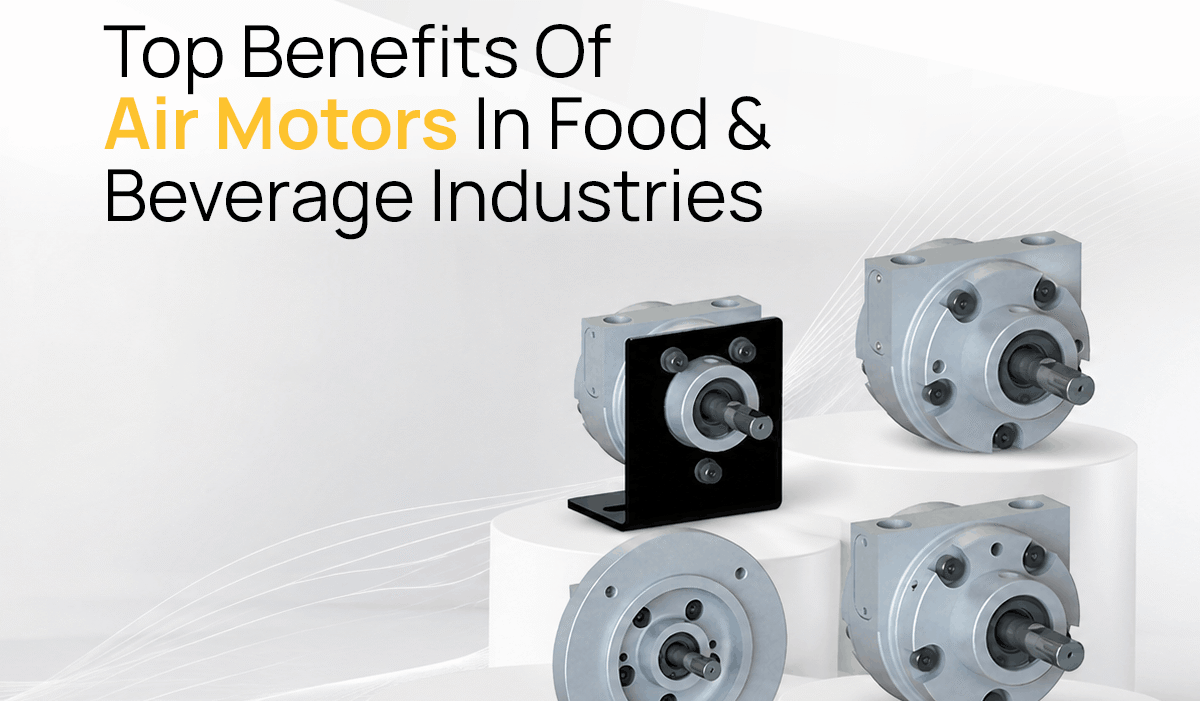
Food and beverage manufacturing runs on precision, hygiene, and consistency, three things that leave very little room for equipment failure or contamination risk. Over the years, our team at Teryair has worked closely with processing plants, bottling units, and packaging lines where the choice of drive equipment quietly shapes everything from product safety to production uptime. One piece of equipment that continues to prove its value across these environments is the air motor. In this blog, we’re breaking down why air motors have become such a trusted choice for food and beverage manufacturers, and what makes them so well-suited to this particular industry.
Why Drive Equipment Choice Matters In Food & Beverage
Every piece of equipment on a food or beverage production line is held to a higher standard than in most other manufacturing sectors. It’s not just about output or speed, it’s about ensuring nothing on the line compromises product safety, regulatory compliance, or worker safety. That’s why decisions around drive equipment deserve more attention than they often get, especially in facilities where hygiene audits and hazard classifications shape almost every purchasing decision.
Unlike many other industries, food and beverage processing comes with a unique set of constraints. Equipment must withstand frequent washdowns, resist corrosion from cleaning agents, operate safely in wash-down or wet environments, and avoid any risk of contaminating the product being processed. Electric motors, while common in other sectors, don’t always hold up well under these conditions, moisture exposure and the risk of electrical sparking make them a less ideal fit for certain applications. This is where air motors offer a genuinely practical alternative.
Reliable Performance In Wash-Down And Wet Environments
Food and beverage facilities are cleaned constantly, often with high-pressure washdowns and chemical sanitizers. This equipment is inherently well-suited to these conditions since it doesn’t carry the same electrical risks as motorized alternatives exposed to moisture. A rotary vane air motor, for instance, can operate reliably even in consistently wet or humid environments without the safety concerns that come with electrical components near water and cleaning agents.
No Risk Of Sparking In Sensitive Environments
Certain food processing applications, particularly those involving fine powders, sugars, or flour, carry a real risk of combustible dust. In these environments, safety is non-negotiable. This equipment doesn’t generate the electrical sparks that pose ignition risks in these settings, making it a safer choice for mixing, conveying, and processing equipment in facilities handling combustible materials.
Consistent Performance Under Variable Load
Food and beverage production lines often deal with fluctuating loads, thicker sauces one moment, thinner liquids the next, or varying batch sizes throughout a shift. A vane-type air motor handles these variations smoothly, since its design allows for consistent torque output even as load conditions shift. This adaptability helps maintain steady production speeds without constant manual adjustment.
Easier Maintenance, Even In Demanding Conditions
Downtime in food and beverage production is costly, both in lost output and in delayed deliveries. Air motors are generally simpler in construction compared to many electric alternatives, which makes maintenance and part replacement more straightforward. An air vane motor, in particular, is built with fewer complex components, meaning routine servicing can often be handled quickly without specialized technical support, keeping lines running with minimal disruption.
Naturally Suited To Hygienic Design Requirements
Hygiene standards in food processing are strict, and equipment often needs to meet specific design requirements to avoid areas where bacteria or residue can accumulate. This equipment can be manufactured with hygienic housing and finishes that meet these standards, making it easier to integrate into equipment that must pass regular sanitation audits and food safety inspections.
Safer Operation In Hazardous, Combustible Zones
Beyond general dust concerns, some food and beverage applications operate in zones officially classified as hazardous due to combustible material handling. Air motors are commonly used in these zones because they inherently avoid the electrical ignition sources that pose risks in classified hazardous areas. This makes them a dependable option for mixers, agitators, and conveyors operating in these higher-risk sections of a facility.
Reliable Torque For Precision Applications
Some food and beverage processes, capping, sealing, and mixing at controlled speeds, require precise torque control rather than raw power. A rotary vane air motor delivers smooth, controllable torque output that suits these precision tasks well, helping maintain consistent product quality across high-volume production runs without sacrificing accuracy.
Cost-Effective Over The Long Run
While the upfront cost of compressed air infrastructure is a consideration, air motors often prove more cost-effective over their operational lifetime due to lower maintenance needs, fewer catastrophic failure risks, and longer service life in demanding wash-down environments. For facilities already running compressed air systems for other equipment, integrating a vane-type air motor into existing infrastructure is often a straightforward and economical decision.
Choosing The Right Air Motor For Your Application
Not every application calls for the same type of air motor. Factors like required torque, speed, environmental exposure, and hygiene classification all influence which configuration works best. One configuration might be ideal for one process, while an air vane motor with a different housing specification suits another. Working with a manufacturer who understands both the mechanical requirements and the specific compliance needs of food and beverage facilities makes this decision considerably easier.
Summary
As food and beverage manufacturers continue to prioritize hygiene, safety, and uptime, this equipment remains a dependable choice across mixing, conveying, capping, and packaging applications. Their moisture resistance, safety in combustible environments, and low-maintenance design make them a practical fit for the unique demands this industry presents. At Teryair, we continue to see facilities turn to this reliable, long-term solution for their toughest production environments.
As production demands continue to grow across the food and beverage sector, the equipment supporting that growth needs to keep pace without introducing new safety or compliance risks. That balance, between performance, hygiene, and safety, is exactly where this kind of solution continues to earn its place on the production floor. If your facility is exploring safer, more efficient drive solutions for wash-down or hazardous zones, it’s worth evaluating whether a suitable configuration fits your specific process requirements.
FAQs
Air motors don’t carry the same electrical risks as motorized alternatives when exposed to moisture, making them better suited to frequent washdowns and wet environments common in food and beverage facilities. They also eliminate the risk of electrical sparking, which matters in areas handling fine powders or combustible dust.
Yes. Since air motors don’t rely on electrical components to operate, they inherently avoid the ignition sources that pose risks in zones classified as hazardous due to combustible material handling, making them a dependable option for mixers, agitators, and conveyors in these areas.
Both terms generally refer to similar underlying vane-based technology, but specific configurations vary based on torque requirements, speed, and housing design. The right choice depends on the specific application, whether its precision torque control for capping and sealing, or handling variable loads on a production line.
Generally, no. Air motors, including configurations like the air vane motor, tend to have simpler construction with fewer complex components, which often makes maintenance and part replacement quicker and more straightforward compared to many electric alternatives.
Yes. Air motors can be manufactured with hygienic housing and finishes designed to meet food safety and sanitation requirements, making them easier to integrate into equipment that must pass regular hygiene audits and inspections.